"I struggle to attract talent", "I don't feel the team is as involved in the project as I would like", "I think customers don't really understand the value of my product", "I'm afraid I should give up"... These are some of the reasons why business owners and managers contact me and ask for a preliminary analysis of their company.
Have you ever looked in the mirror and not recognized yourself? When that happens, a misalignment has occurred between who you are inside and what you do, what shows. We don't want to wander into psychology, only to remind you that talking about a company always means talking about people too, and a misalignment between being and doing is more common than you might think and can lead to problems of many kinds.
A preliminary analysis is simply an organized, explained account of the brand's perceptible image: the perception, from an outside point of view, of what the company communicates about itself to the world.
While communication is active, perception is passive and is shaped by factors beyond our control (beliefs, culture, stereotypes, etc.).
Looking in the mirror before leaving the house is like checking whether what we are communicating to the world is what we really want to communicate. In other words, whether our image and our identity are aligned.
👉 Brand identity vs. perceived image: a challenge for SMEs
When we talk about a brand, some fundamental concepts define its identity and its impact on the audience.
The goal is to keep this identity constantly aligned with the image the customer perceives. This not only builds trust and loyalty among customers, it also sets us apart from competitors and creates unique value in the market.
How to define corporate identity: mission, vision, purpose and values
To define who we are and what we stand for, we need to focus on four key elements: mission, vision, purpose and values.
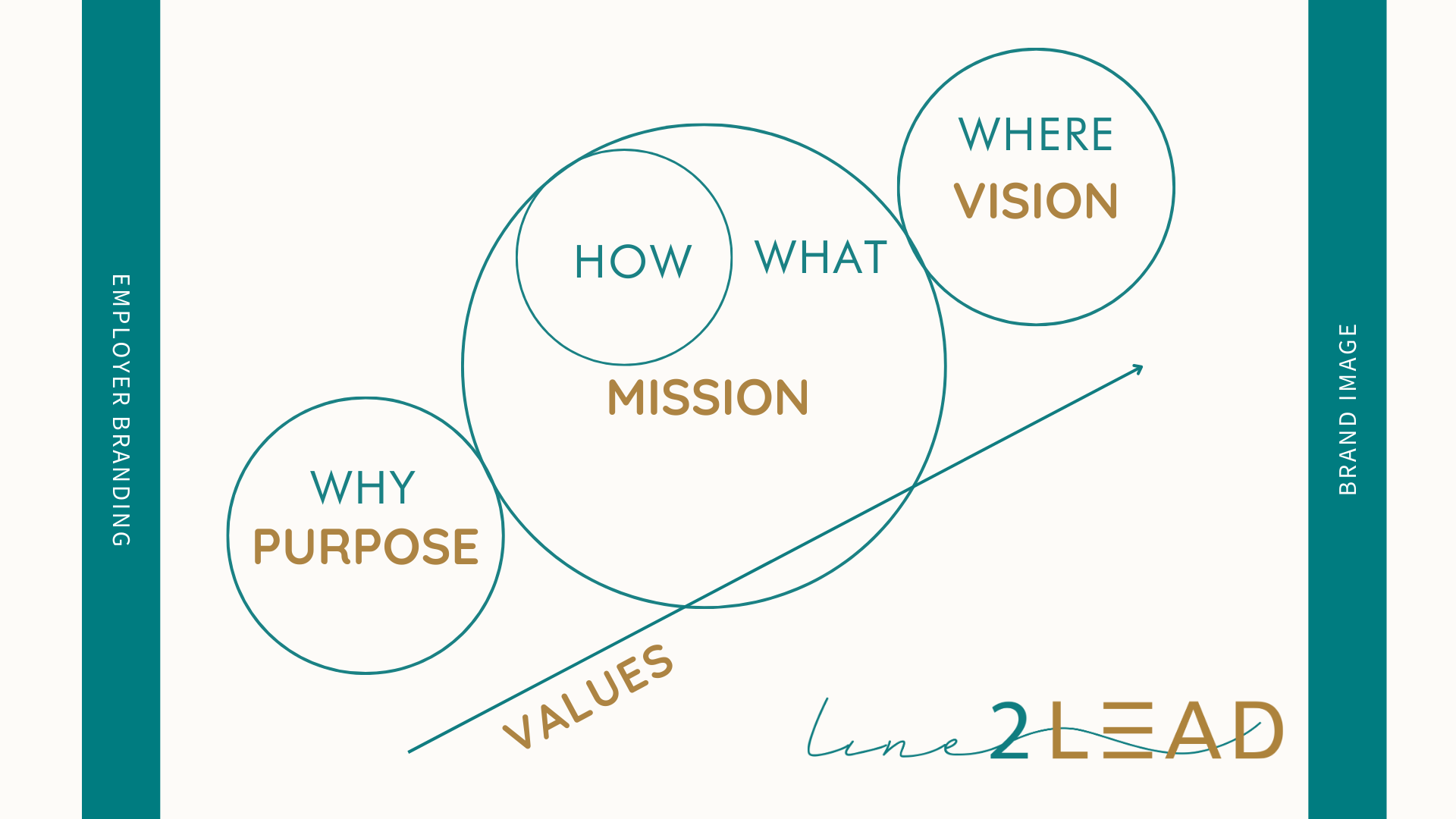
The mission
The mission is our reason for being, the statement that guides every action the company takes. It answers the questions "What do we do?" and "For whom?". It is our operational identity: concrete and action-oriented.
A company's mission defines three dimensions:
📌 What the company does
📌 How it does it
📌 Its target audience
It is a genuine statement of intent and represents the main reason the company exists.
The vision
The vision represents our future direction, the ideal picture we want to reach. It answers the questions "Where do we want to get to?" and "What are our ambitions?". It is our aspiration, a beacon that guides our everyday activities.
A company's vision defines:
📌 Which problem the company solves,
📌 What its aspirations are, and
📌 Where it wants to be in the future
The vision is a source of inspiration for the company and represents an ambitious (but realistic) goal to reach.
The purpose
The purpose goes beyond classic business strategy and focuses on the company's "social mission". It represents the deepest reason for the company's existence and the role it intends to play in society. The purpose reflects the impact the company wants to have on the world, considering not only economic aspects but also social and environmental ones. It is the very essence of the business and defines its long-term aim.
The values
A company's values are the fundamental principles that guide its decisions and actions. They form the company's ethics and beliefs and provide behavioral guidelines for everyone in the organization. Values reflect the ethical and moral principles on which relationships with shareholders, employees and customers are built.
Communicating corporate identity
Once mission, vision, purpose and values are clearly defined, it becomes essential to communicate them both internally and externally. Internal communication involves employees, creating a sense of belonging and shared goals. Newsletters, meetings, training and learning materials are useful tools for conveying corporate identity within the organization.
External communication is just as important, because it allows customers, suppliers and other stakeholders to understand and identify with the company's identity. Through channels such as the website, social media and advertising campaigns, we communicate our values and purpose to the outside world, attracting potential customers who feel close to us.
In short, mission, vision, purpose and values are the pillars on which corporate identity rests. They guide strategic decisions, inspire employees and create an emotional bond with customers. Understanding and communicating them effectively is essential to any company's long-term success.
Communicating these elements effectively is crucial to engaging employees, customers and stakeholders. Through multichannel internal and external communication, we can create a sense of belonging and shared goals both inside and outside the company.
Stated mission, perceived identity: do they match?
Writing a mission and a vision is the first step. The second, which almost no SME takes, is checking whether customers, partners and the market perceive the same identity the company declares.
When the two images do not match, marketing works against the company: it communicates values the market does not recognize and invests budget in a positioning that does not exist.
MirrorCheck® measures exactly this gap: it compares external perception, corporate identity and business objectives, and shows where value is being lost.
What does this gap look like in real companies? The method cases describe eleven diagnoses told without names: the initial request, the question that replaced it, the decision it made possible.
Read the method cases Book a call
Corporate identity: mission, vision, purpose and values